
Azelaic acid can help with dark circles, but only when they’re caused by pigmentation. If your under-eye area looks brown or grey and doesn’t improve with sleep, you’re likely dealing with the same type of discolouration as facial dark spots, which responds best to targeted treatment using products designed for uneven skin tone, like those in this hyperpigmentation treatment collection.
The confusion around dark circles comes from the fact that not all of them are the same. Some are caused by pigment, others by blood vessels or facial structure, and each requires a completely different approach. Azelaic acid only works on one of these, and that’s where most people get it wrong.
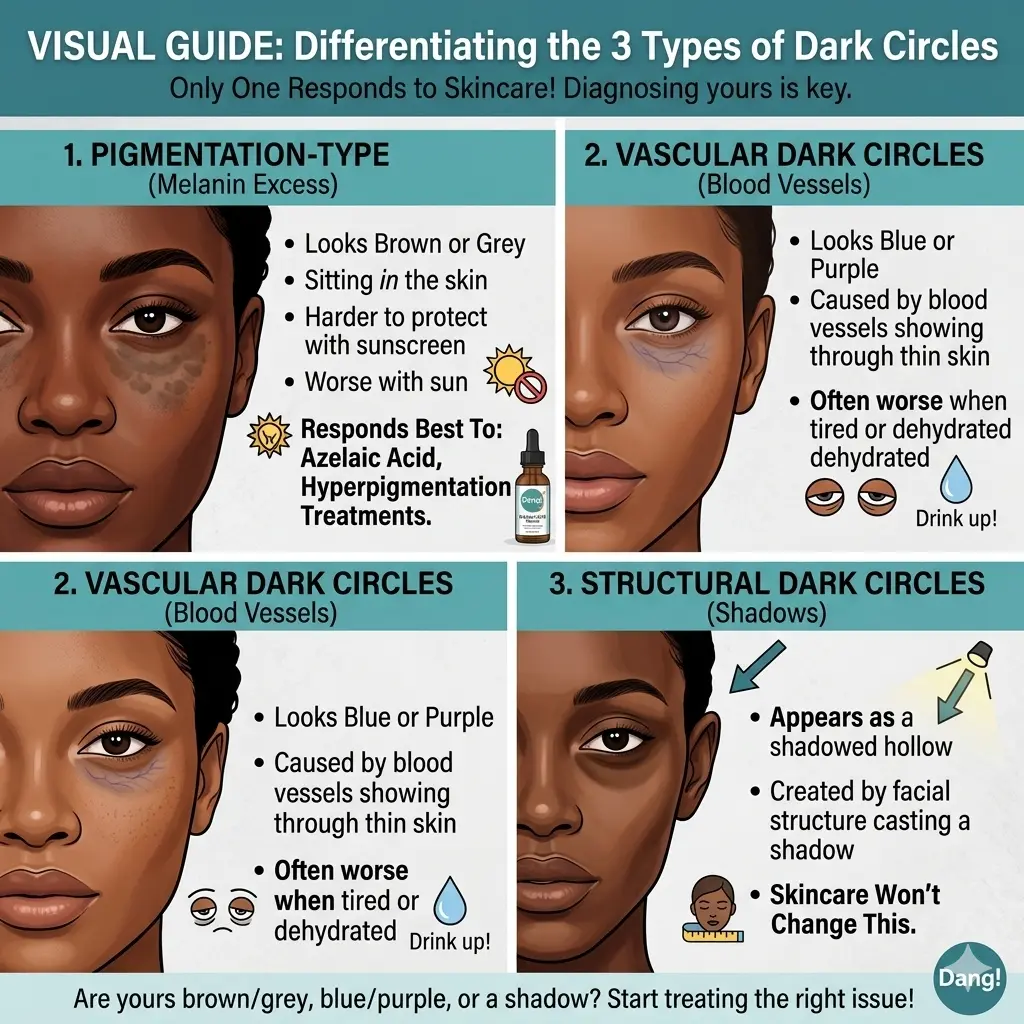 The biggest mistake people make is assuming all dark circles are the same.
There are three completely different causes, and only one of them responds to skincare. That’s why someone can try multiple products and see no change; it’s not that the product is ineffective, it’s that the diagnosis is wrong.
The biggest mistake people make is assuming all dark circles are the same.
There are three completely different causes, and only one of them responds to skincare. That’s why someone can try multiple products and see no change; it’s not that the product is ineffective, it’s that the diagnosis is wrong.
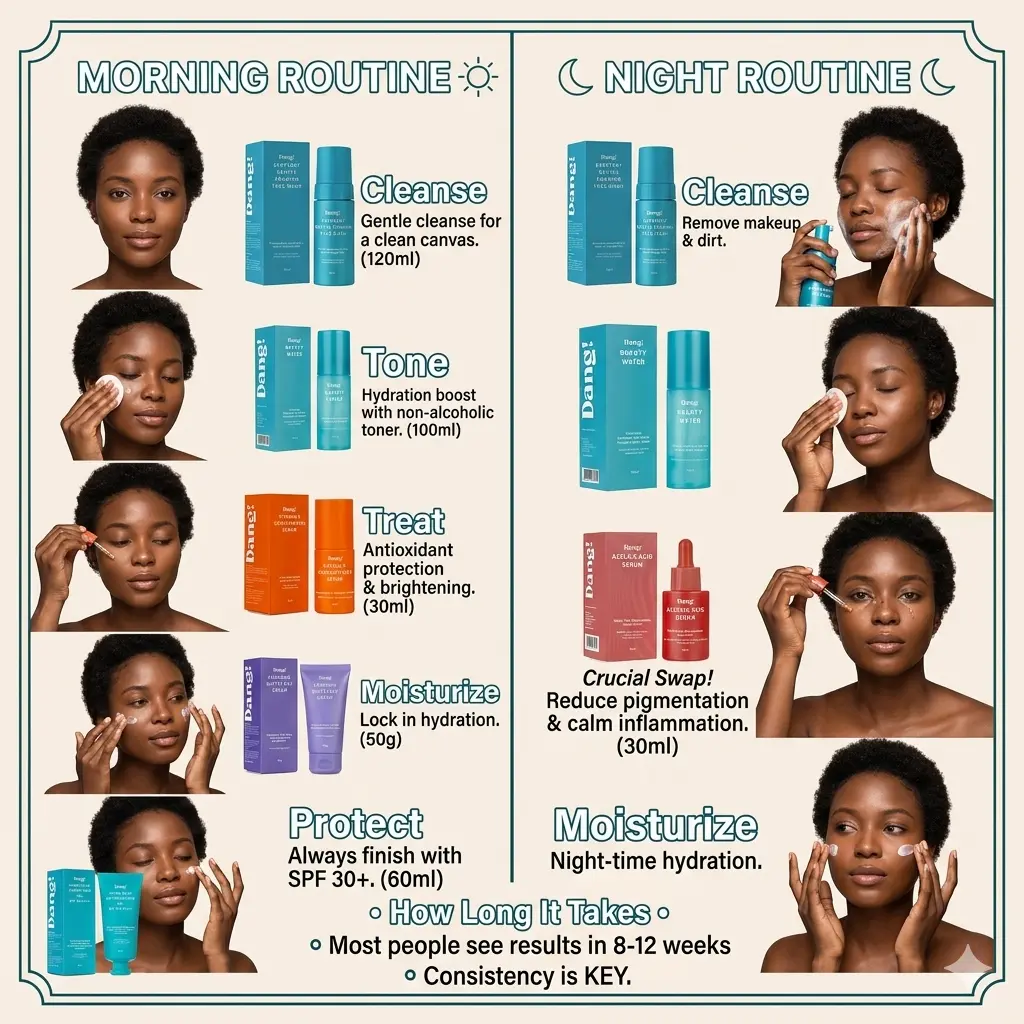 Here’s a step-by-step routine on how to use azelaic acid for dark circles caused by hyperpigmentation.
Morning
Here’s a step-by-step routine on how to use azelaic acid for dark circles caused by hyperpigmentation.
Morning

Key Takeaways
- Azelaic acid only works on dark circles caused by pigmentation, not vascular (blue/purple) or structural (shadow-based) dark circles.
- Melanin-rich skin is more prone to pigmentation under the eyes, making azelaic acid a more effective treatment in these cases.
- Consistency and daily use of sunscreen with at least SPF 30 is key. Visible improvement typically takes 8 -12 weeks.
- Correct diagnosis matters, using the wrong treatment is the main reason most people see no results.
Does Azelaic Acid Work for Dark Circles Under Eyes?
Yes, but only in specific cases. Azelaic acid works by reducing excess melanin production, so it helps with dark circles caused by excessive pigmentation. If your under-eye area looks brown or grey and doesn’t really change with sleep, that’s a strong sign you’re dealing with this type. If your dark circles look blue or purple, or they appear more like a shadow than a stain in the skin, azelaic acid won’t do much. In those cases, the issue isn’t pigment; it’s either blood vessels or facial structure. If you’re also dealing with dark spots on other parts of your face, see this full guide on how to use azelaic acid for hyperpigmentation.Treating Dark Circles With Skincare: Why Most People Don’t See Results
The biggest mistake people make is assuming all dark circles are the same.
There are three completely different causes, and only one of them responds to skincare. That’s why someone can try multiple products and see no change; it’s not that the product is ineffective, it’s that the diagnosis is wrong.
- Pigmentation-type dark circles are the most common on dark skin. They sit within the skin, look brown or grey, and tend to get worse with sun exposure. This is where azelaic acid actually works.
- Vascular dark circles come from blood vessels showing through thin skin. They look blue or purple and often get worse when you’re tired or dehydrated. No brightening ingredient will fix that.
- Structural dark circles are caused by the shape of the face, usually a hollow under the eye that creates a shadow. Skincare won’t change that at all.
Why Dark Circles Are More Common on Dark Skin
Dark skin is more prone to pigmentation because melanocytes are more reactive. That means even small triggers, like rubbing your eyes, minor irritation, or sun exposure, can lead to excess pigment production. The under-eye area makes this worse. The skin there is thinner, more sensitive, and harder to protect properly with sunscreen. Over time, that combination leads to stubborn discolouration that doesn’t fade easily. That’s why treating the root cause, melanin production, is more effective than trying to brighten the surface. If you’re dealing with broader uneven skin tone, your under-eye concerns are usually part of the same pattern. A full routine matters, not just one product.How Azelaic Acid Helps Clear Under-Eye Pigmentation
Azelaic acid is a gentle yet very active acid. It slows down melanin production, calms the inflammation that triggers pigmentation, and helps the skin renew itself more evenly. Over time, that combination reduces the depth and visibility of dark areas under the eyes. It’s not an overnight fix. But it’s one of the few ingredients that targets the actual cause instead of just masking the problem.How to Use Azelaic Acid for Dark Circles Under Eyes
Here’s a step-by-step routine on how to use azelaic acid for dark circles caused by hyperpigmentation.
Morning
- Cleanse with a gentle cleanser and apply a non-alcoholic toner for a hydration boost.
- Next, apply vitamin C serum for antioxidant protection and brightening benefits
- Apply your moisturiser to lock in all the benefits
- Always finish off with a sunscreen with at least SPF 30 to protect your skin and avoid further pigmentation.
- Follow the same steps in your morning routine.
- Only swap step 2 with azelaic acid serum and skip the sunscreen at night.
The Azelaic Acid for Pigmentation Dark Circles
The Dang! 10% Azelaic Acid Serum is a next-level formula, designed to do more than the basics. Its strength lies in a blend of azelaic acid, niacinamide, and liquorice root, plus other supporting ingredients, which allows it to target hyperpigmentation at multiple stages. This multi-pronged approach is especially crucial for dark skin, where pigmentation issues are often more stubborn. Furthermore, its lightweight texture makes it suitable for use around the delicate under-eye area, avoiding the heavy feel or unwanted residue of some other products. Shop the Dang! Azelaic Acid SerumHow Long Does it Take for Azelaic Acid to Reduce Hyperpigmentation?
With any skincare product, consistency and patience are key. You’re not going to see changes in a week or two. The under-eye area responds more slowly than the rest of the face. Most people start noticing a difference between 8 and 12 weeks. With consistent use and daily sunscreen, the improvement becomes more obvious over a few months. If nothing changes after that, it’s usually a sign that pigmentation isn’t the main issue.
